Thank you to all participating hubs, guests, and sponsors!
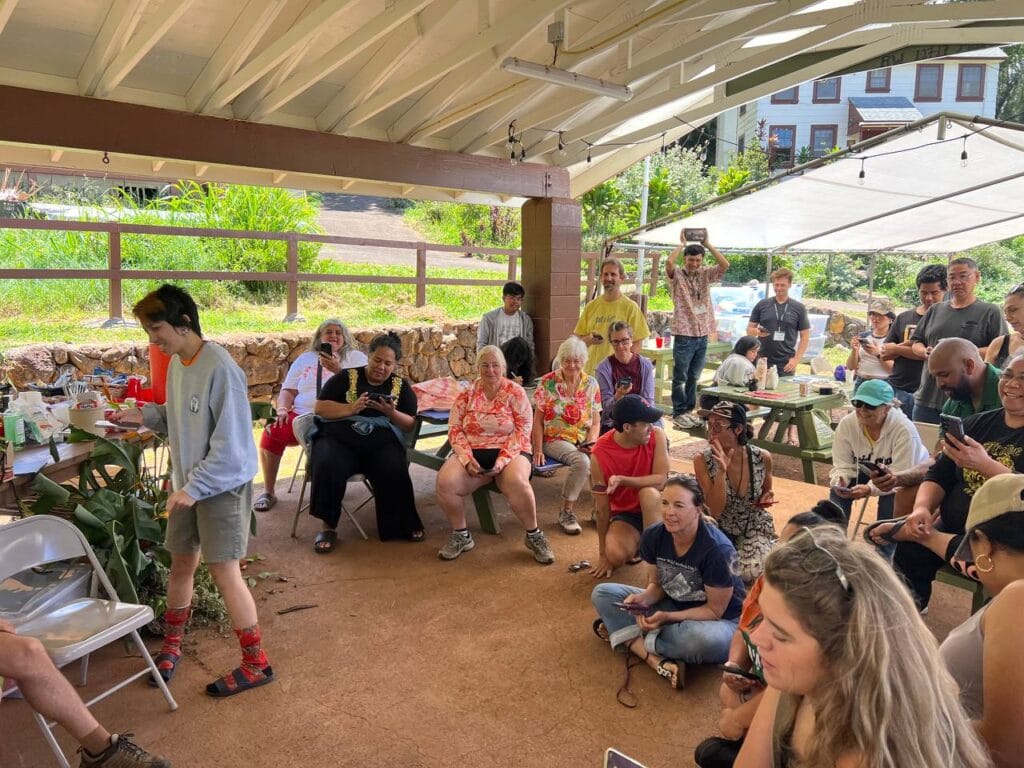
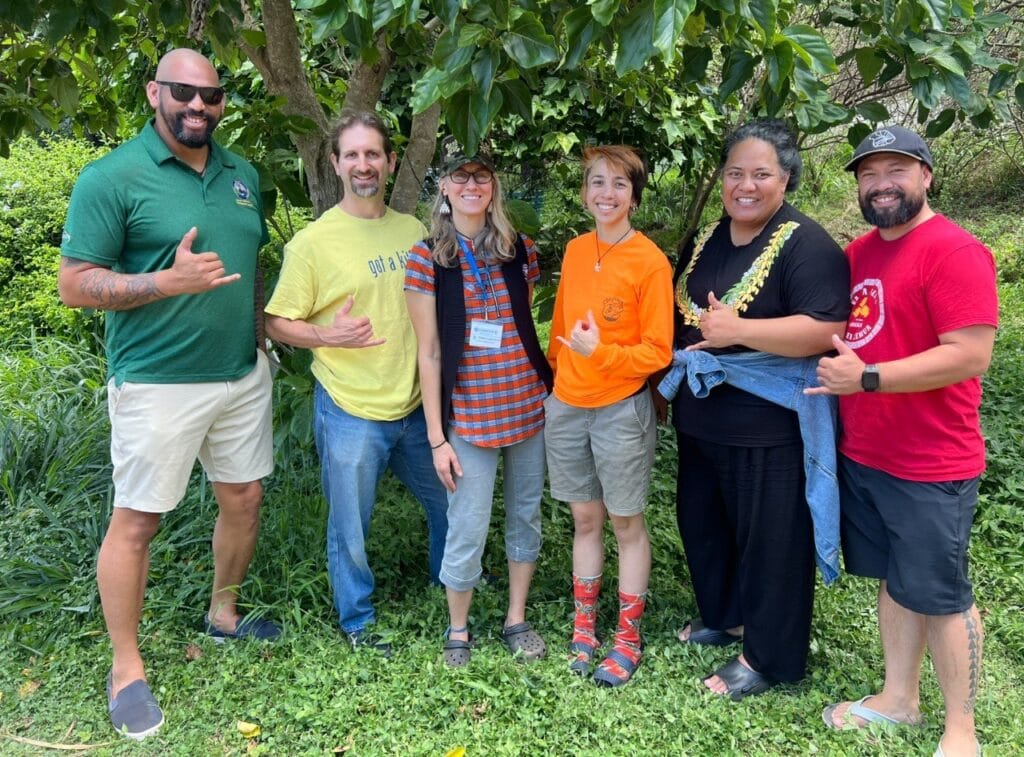
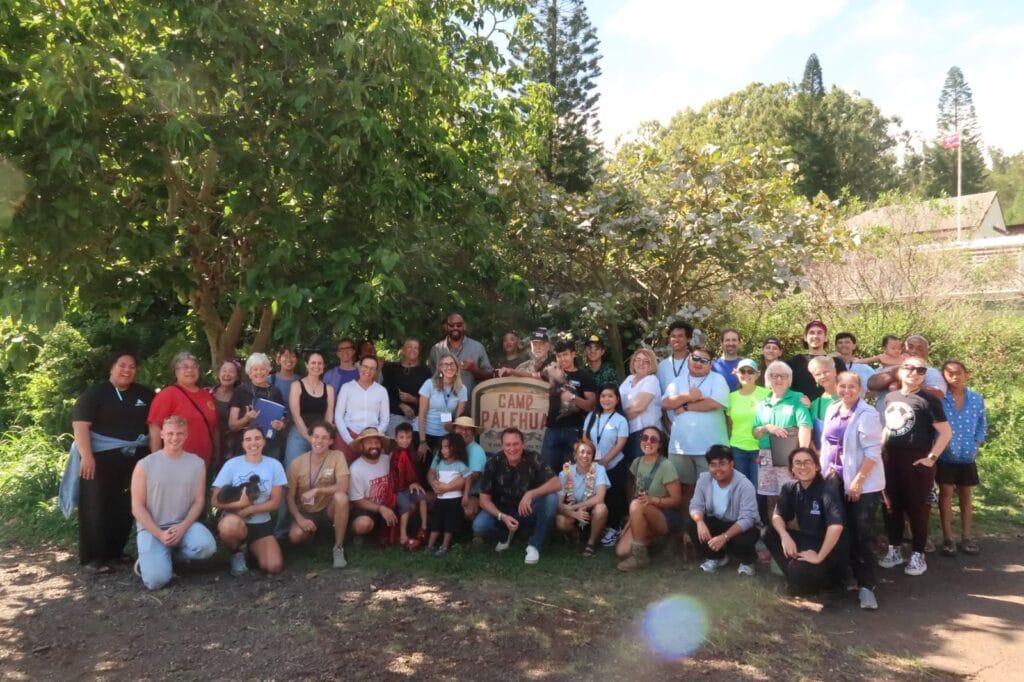
Over two days, representatives from resilience hubs, state departments, emergency programs, and interest groups came together to strengthen an island wide resilience network in Oahu. Both new and experienced hubs acquired foundational skills and knowledge, along with the tools needed to coordinate resources, strengthen neighborhood connections, and activate their hubs when the community needs them most , along with the opportunity to connect with the community in preparation for hurricane season and to uphold long term resilience.
| @Camp Pālehua | June 5 – June 6 2026 |
Land Acknowledgment
He ʻĀina, He Kanaka, He Hawai‘i Maoli
We acknowledge Hawaiʻi as an indigenous space where the descendants of the original people are today identified as Kānaka Maoli (Native Hawaiian). We recognize that it was through coercion, force, and the breaking of formal treaties that this land was illegally seized. Her majesty Queen Liliʻuokalani temporarily yielded the Hawaiian Kingdom and these territories under duress and protest to the United States to avoid the bloodshed of her people. Let us further recognize and express gratitude for the generations of Aboriginal Hawaiians and their knowledge systems that have shaped and continue to shape Hawaiʻi in a sustainable way that allows us to learn here today.
The ʻāina (land) on which the University of Hawai‘i at Mānoa sits is located in the ahupuaʻa (land division from mountain to sea) of Waikīkī, in the moku (district) of Kona, on the mokupuni (island) of Oʻahu, in the Pae ʻĀina o Hawaiʻi (Hawaiian archipelago). The particular ʻili ʻāina (land division) that Kennedy Theatre is situated on is at the triangulation of Kaualaʻa, Wailele and Waʻahila. Ma kai (seaward) of the theatre is Kapaʻakea and to the west is Puahia and Pilipili. Ma uka (inland) of our campus are the uplands of Kahoʻiwai, the water that is the source for our major stream of Kānewai. Acknowledging these traditional wahi pana (place names) honors the ‘āina and the historic relationship that Kānaka Maoli have with this place.
Overview
Day 1
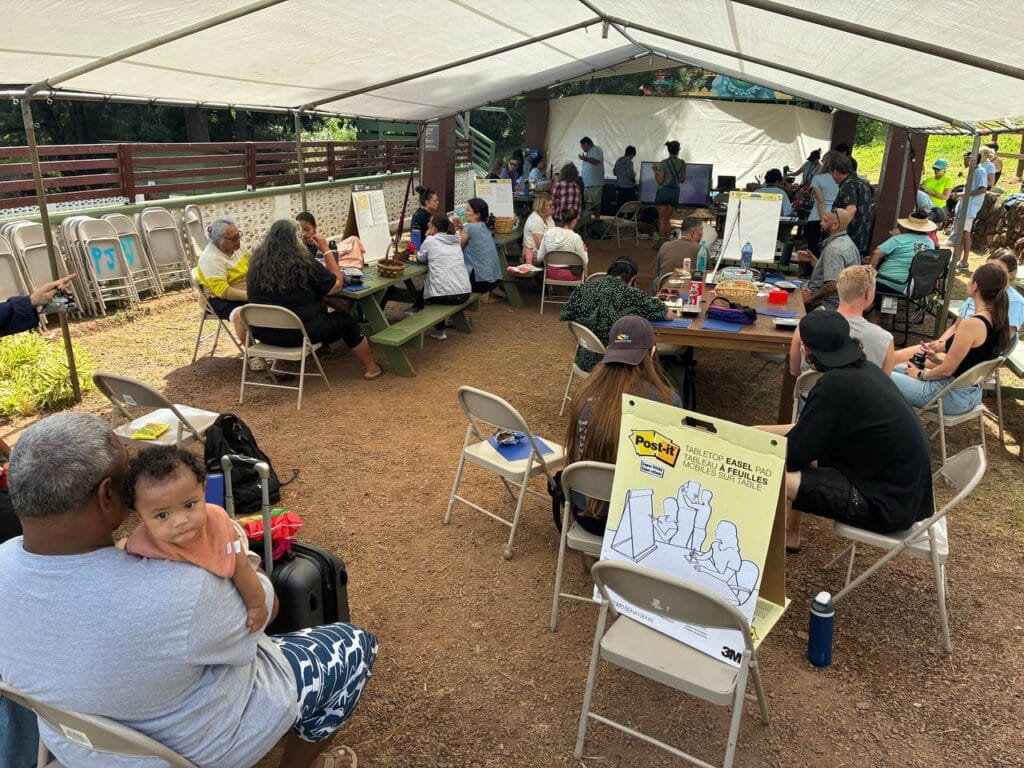
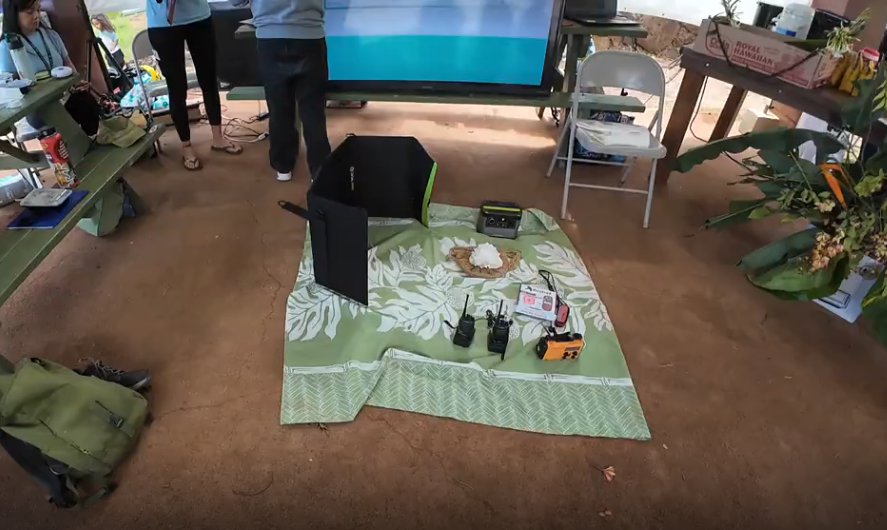
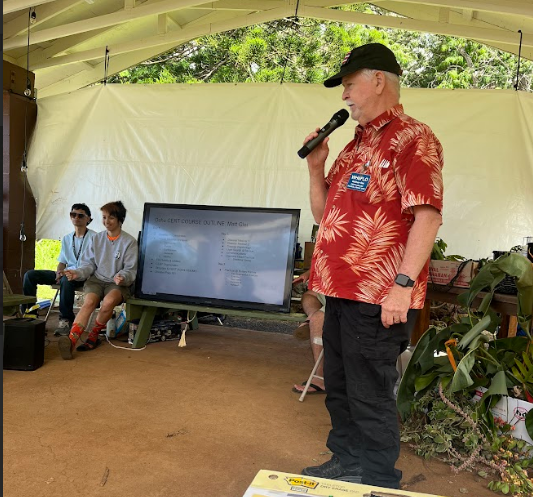
Hub members and guests learned about the story and framework of Vibrant Hawaiʻi and discussed supplementary actions and components on making hubs more resilient. Members participated in a workshop on utilizing communication tools such as different types of radios, Starlink, and Meshtastic. Members participated in a hands-on activity that helped standardize a shared platform for coordination across islands, such as Telegram. The program also included Psychological First Aid training, offering practical approaches for supporting community well‑being during emergencies.
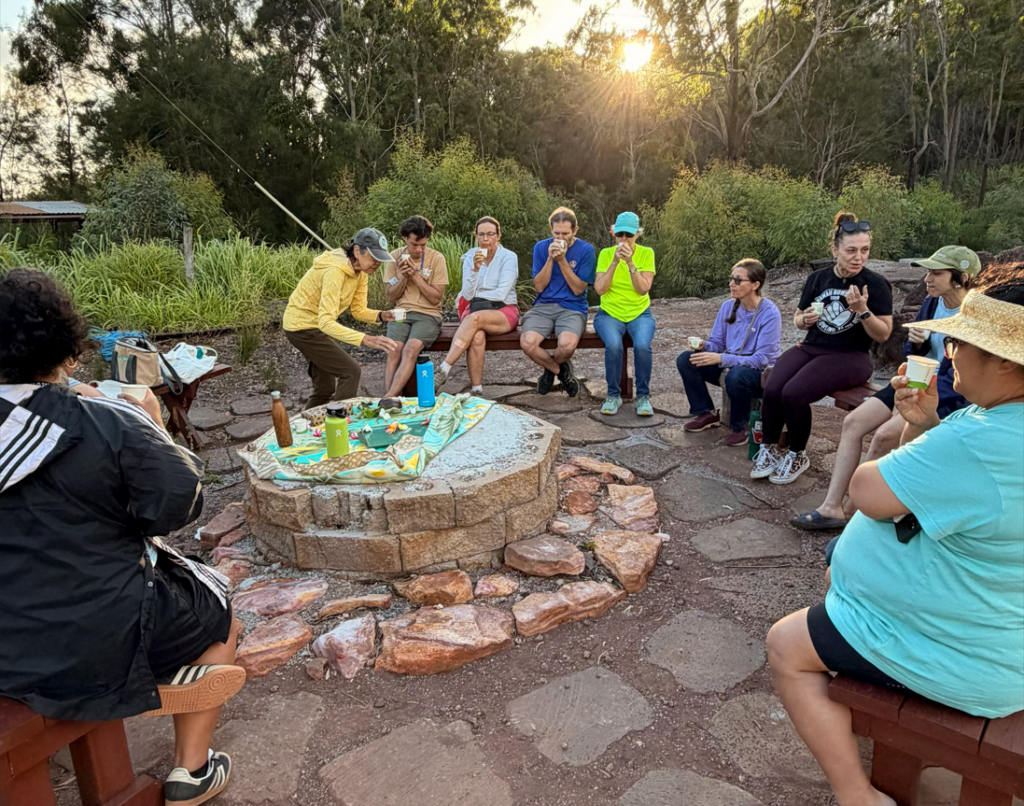
As the day transitioned into evening, attendees participated in Sunset Forest Bathing, a reflective nature-based practice, before closing with a Fireside Chat with Next Gen Youth, highlighting the voices and leadership of Hawaiʻi’s emerging generation.
Day 2
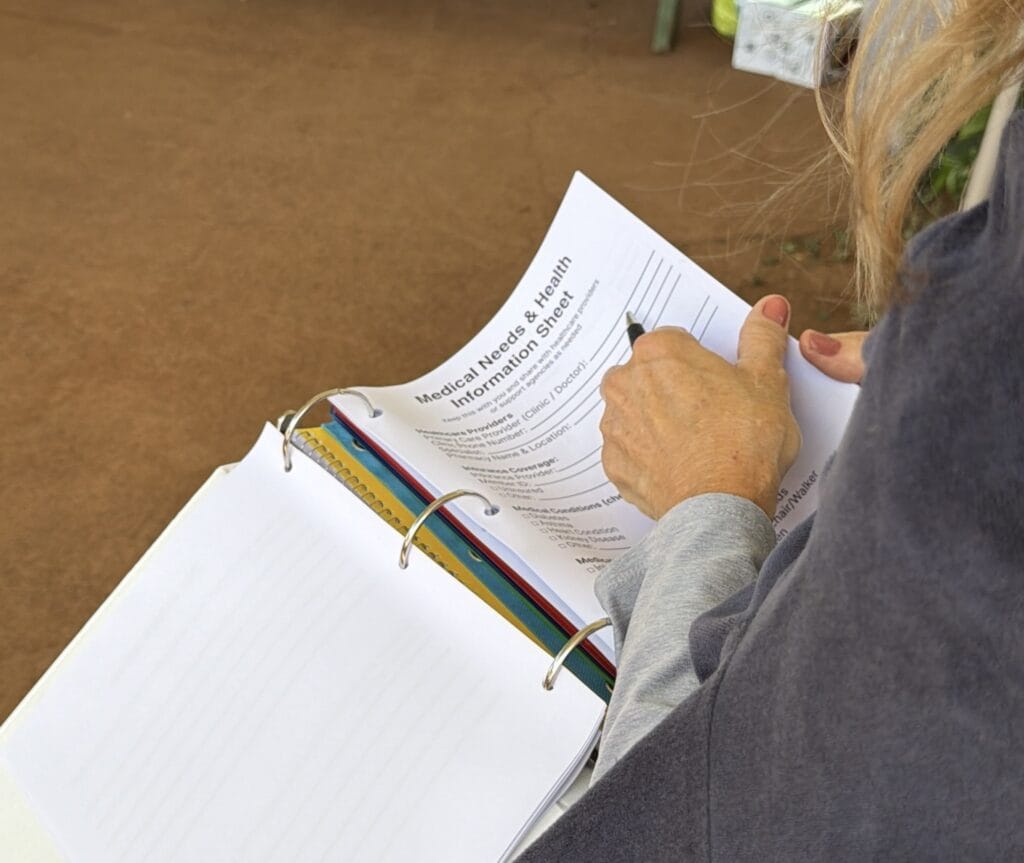
On the second day, members and guests continued the discussion on deepening hub resilience and emergency preparedness, featuring the CERT Program and hands-on Community Emergency Action Plan (CEAP) workshops. Representatives from HI-EMA presented the HHARP program, offering insights into statewide hazard awareness and response planning.
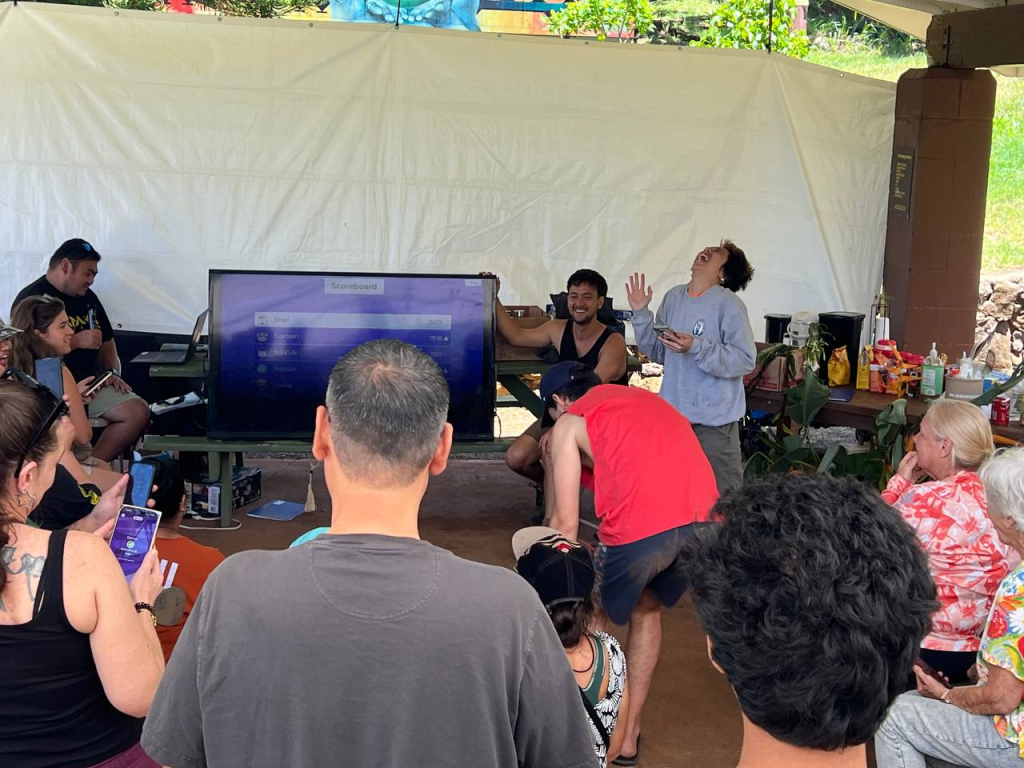
Members and guests joined a Kahoot activity following the workshops, along with a raffle draw for a chance for hubs to win a Starlink. Members reflected on the significant effects that the Kona Low had on the community and the steps needed to take for preparedness and recovery. The next workshops guided participants to prepare for hurricane season, such as assembling Emergency To-go Bags and 14-Day Survival Kits, alongside an Information Communication Activity to strengthen coordination during crises.
The summit concluded with a VH Coordinated Network session, followed by the distribution of hub starter kits and a closing circle—a moment of reflection and shared commitment to resilience across Hawaiʻi.
Summit by the Numbers:
| 9 Workshops | 14 Hubs | 6 HLC Leaders | 18 Next Generation Leaders | 50+ Attendees |
CERENE Team
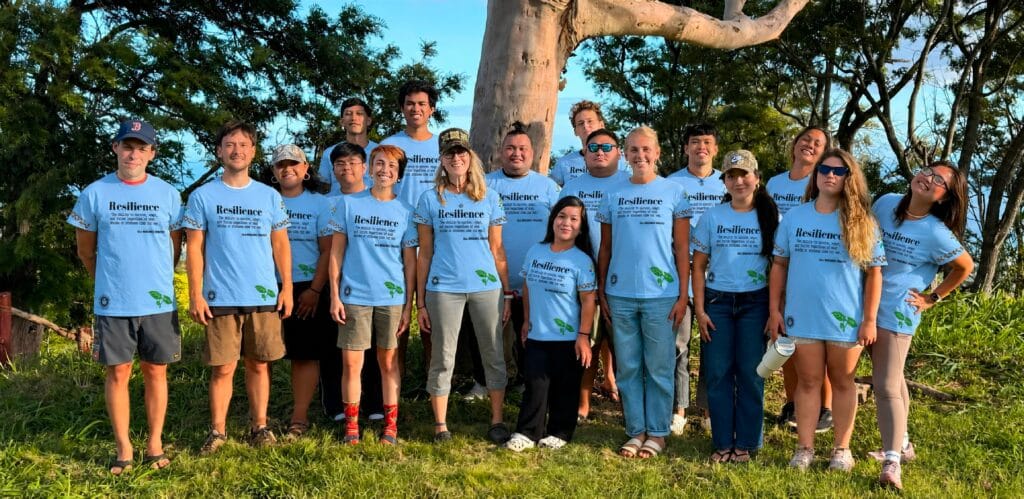
Thank you to the CERENE staff and interns, Resilience Core Leaders, and Lāhui Foundation for supporting the facilitation of the Oahu Resilience Hub Summit!
Hubs, Guests, and Sponsors
| Central Union Church | LEI Foundation |
| Kailua Alert and Prepared | Kahuku Community Association |
| Le’ahi Hub | Elepaio Social Services |
| ONE Laie | Office of Climate Change, Sustainability, and Resiliency |
| Malama Loko Ea Foundation | KKCERT |
| Hui O Hau’ula | Hui Holoholo |
| Hawaii Emergency Management Agency | Lahui Foundation |
| Oahu Neighborhood Hubs | PUC / Faith Hub |
| Central Oahu Group |